The use of the rapid diagnostic test (RDT) as a self-test by non-healthcare professionals represents a promising strategy for improving access to malaria diagnosis in remote areas, provided that users are able to perform it correctly and accurately interpret the results.
This article presents a cross-sectional study conducted in Oiapoque (Brazil) as part of the CUREMA project, which evaluates the feasibility of the Bioline Malaria Ag P.f/Pan/P.v RDT among artisanal gold mining workers following a training session delivered by community health workers within the framework of the Malakit intervention.
In the gold mining areas of French Guiana, access to healthcare is often out of reach — yet malaria remains a real threat. The Malakit/CUREMA project set out to find out whether miners could reliably perform and interpret a rapid diagnostic test (RDT) for malaria on their own.
Between May and July 2024, 40 gold miners took part in the study in Oiapoque, Brazil.
How did it work?
The training lasts just 15 to 20 minutes, delivered by community mediators — people from within the community itself — using two main tools:
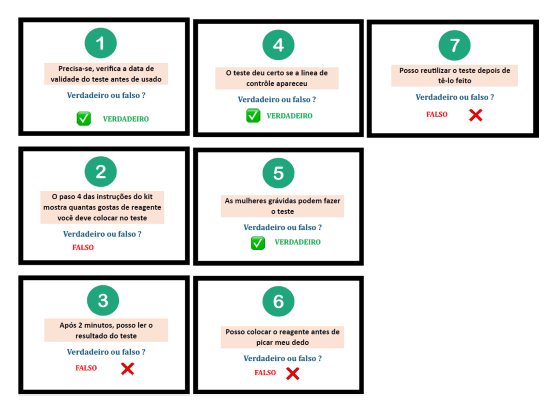
Flashcards with illustrated questions cover RDT best practices: how to prepare, how to perform the test, and how to interpret the result.
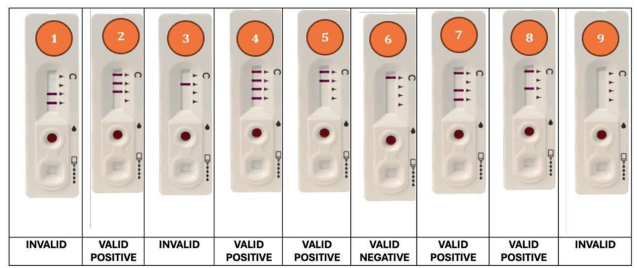
Pre-prepared test strips allow participants to practise reading and interpreting different types of results: positive, negative, or invalid.
And the results?
- Knowledge of best practices: 83.9% correct answers
- Test performance: 84.6%
- Result interpretation: 77.2%
- Overall practicability score: 81.9%
Every participant managed to obtain a valid test result.
The main challenge? Self-finger-pricking. The main support? Community mediators and videos.
These results show that with the right training, even populations with low levels of formal education can perform reliable self-testing — a real step forward for communities too often left behind by health systems.